
Connection Between Mental Health and Addiction
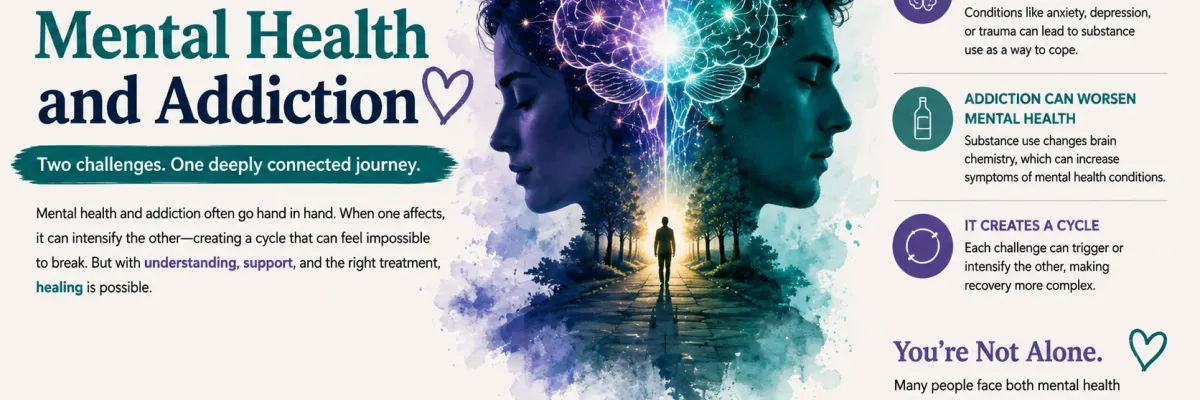
Across the U.S., millions of people are quietly fighting two battles at once; one against mental health struggles and another against addiction. It’s a painful cycle that can leave someone feeling hopeless, confused, and alone. This overlapping challenge is called dual diagnosis, and it’s far more common than most realize. According to the Substance Abuse and Mental Health Services Administration (SAMHSA), roughly 9.2 million adults in America live with both a mental illness and a substance use disorder. Understanding the connection between mental health and addiction isn’t just important for treatment professionals; it’s essential for anyone who wants to support a loved one or begin their own journey toward recovery.
What Does “Dual Diagnosis” Really Mean?
A dual diagnosis, also known as a co-occurring disorder, happens when a person experiences both a mental health condition; like depression, anxiety, bipolar disorder, or PTSD and a substance use disorder.
These two conditions often feed into each other. For example:
- Someone with chronic anxiety might use alcohol to calm their nerves.
- A person with depression may rely on opioids or stimulants to feel some energy or relief.
- Trauma survivors might turn to drugs or alcohol to numb painful memories.
While these substances can bring temporary comfort, they also make symptoms worse in the long run creating a cycle that’s hard to break without proper help.
The Science Behind the Connection
Both mental health disorders and addiction change how the brain functions. Substances like alcohol, opioids, and stimulants alter the levels of chemicals like dopamine and serotonin, which affect mood, motivation, and pleasure.
When someone is struggling emotionally, using substances can seem like an easy way to “fix” the pain. But over time, the brain becomes dependent on those substances to function normally. The result? Mental health symptoms intensify, cravings grow stronger, and the person becomes trapped in a loop of self-medication and worsening distress.
The National Institute on Drug Abuse (NIDA) reports that people with mood or anxiety disorders are twice as likely to develop a substance use disorder. And the reverse is also true, substance use can trigger or worsen underlying mental health problems.
More Than Biology: Environment and Life Experience Matter
While brain chemistry plays a role, the connection between mental health and addiction isn’t just biological. Environment and life experiences are powerful influences.
- Chronic stress, unresolved grief, and social isolation can push people toward unhealthy coping methods.
- Trauma, especially in childhood, dramatically increases the risk of both addiction and mental illness.
- According to the CDC, people with Adverse Childhood Experiences (ACEs) such as abuse, neglect, or household substance use are significantly more likely to struggle with co-occurring disorders later in life.
In other words, addiction and mental health disorders don’t develop in a vacuum. They are shaped by biology, environment, and experience, which is why recovery must address all three.
Why Treating Both Together Works Best
For decades, treatment systems often focused on either addiction or mental health, but not both. The result was frustratingly high relapse rates.
Today, research shows that integrated dual diagnosis treatment produces better, longer-lasting outcomes. This approach treats both conditions at the same time, understanding that one affects the other.
An effective dual diagnosis treatment plan usually includes:
- Individual therapy (such as CBT, DBT, or trauma-informed therapy)
- Medication management, when appropriate
- Group counseling and peer support for connection and accountability
- Holistic practices like mindfulness, exercise, and nutrition
- Family therapy to rebuild healthy relationships
At Revive Recover, we use evidence-based methods designed to help clients stabilize emotionally, heal physically, and rebuild their lives with purpose and clarity.
Recognizing Signs of Dual Diagnosis
If you are wondering whether you or someone you love may have a dual diagnosis, look for these signs:
- Using substances to manage stress, pain, or emotions
- Persistent feelings of anxiety, sadness, or hopelessness
- Frequent mood swings or emotional outbursts
- Difficulty functioning without alcohol or drugs
- Relapsing shortly after mental health or addiction treatment
When both mental health and addiction are present, specialized dual diagnosis care is crucial. Trying to treat one issue while ignoring the other can make recovery much harder.
Hope Through Integrated Healing
While dual diagnosis can be complex, it’s also highly treatable. With the right support, people can heal both their mind and body; finding freedom from the chaos of addiction and the weight of mental illness.
Studies in the Journal of Substance Abuse Treatment show that integrated treatment programs can reduce relapse rates by up to 30% compared to standard care. That’s because treating both conditions together helps individuals understand the full picture of their recovery and build healthier coping strategies that last.
At Revive Recover, we believe that recovery is more than sobriety, it’s about healing the mind, strengthening resilience, and finding peace. With compassion, professional guidance, and evidence-based treatment, lasting recovery is absolutely possible. Contact us today to learn more.