
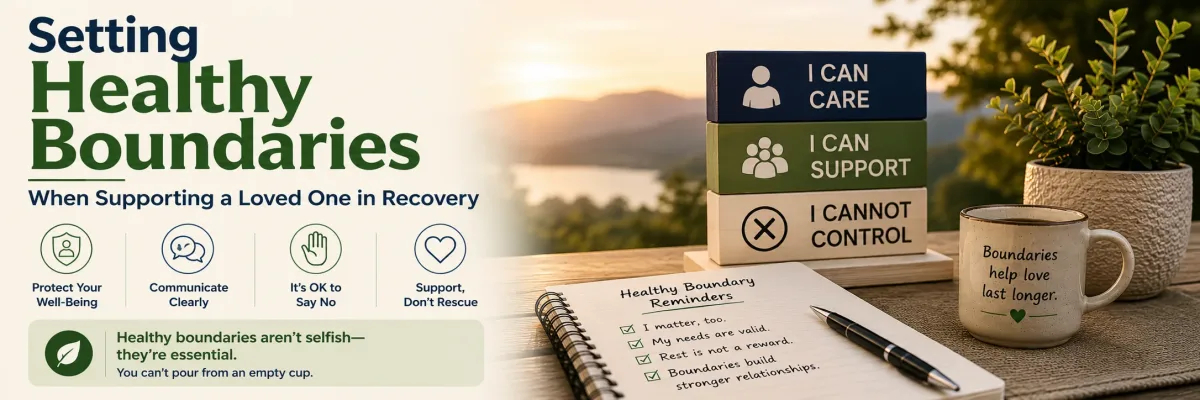
Setting Healthy Boundaries When Supporting a Loved One in Recovery
Supporting someone you love through addiction and recovery is one of the most selfless, challenging, and emotional journeys you can take. You want to help, protect, and lift them up but it’s easy to cross the line from supporting to rescuing.
At Revive Recovery Center of Beaumont, we see this every day. Families pour their hearts into helping a loved one heal, but without meaning to, they sometimes make recovery harder by removing accountability. They give rides, money, and second chances; because that’s what love looks like, right? But in recovery, love also means knowing when to step back.
The key to helping your loved one and yourself is learning to set healthy, compassionate boundaries. Boundaries don’t push your loved one away. They create a space where honesty, respect, and healing can grow. They help both of you stay grounded as recovery unfolds — one day, one choice at a time.
Why Healthy Boundaries Are So Important
Boundaries are like property lines, not fences to shut people out, but markers that say, “This is where my responsibility ends, and yours begins.”
When you are supporting someone in recovery, those lines can get mighty blurry. Without boundaries, it’s easy to:
• Cover up for missed appointments or relapses.
• Hand over money that ends up feeding addiction instead of recovery.
• Feel constantly anxious, resentful, or drained.
Healthy boundaries bring clarity back into the relationship. They remind your loved one that their recovery is their responsibility, while giving you the peace and emotional space you need to stay strong.
At Revive, we often remind families: You can love someone deeply and still say “no.” That isn’t rejection, it’s respect. For them, and for yourself.
What Happens When Boundaries Don’t Exist
When families don’t set boundaries, they can easily slip into codependent patterns, where one person’s emotional well-being depends on the other’s choices.
That can look like:
• Making excuses to your boss or friends for your loved one’s behavior.
• Losing sleep or skipping church trying to “fix” their problems.
• Feeling guilty if their recovery isn’t going smoothly.
Over time, this wears everybody down. Recovery is about ownership, and that goes both ways. Your loved one needs the freedom, and sometimes the hard truth, to face their own consequences. That’s how real growth happens.
As we often say here in Southeast Texas: you can’t pour from an empty cup. Setting boundaries lets you take care of your own soul, so you can show up with love that’s steady, not stretched thin.
How to Set Healthy Boundaries That Stick
Setting boundaries doesn’t mean being cold or harsh. It means combining grace with grit, love with limits. Here’s how to make them stick:
- Be Honest and Clear
Sit down and talk openly. Let your loved one know you care deeply, but there are certain things you can and cannot do. For example: - “I will always support your recovery, but I can’t give you money.”
- “You are welcome in our home when you are sober.”
- “I will drive you to meetings, but I can’t chase you down if you skip them.”
- Follow Through Consistently
Boundaries only work if they are consistent. If you say no, mean it; with kindness. The goal isn’t punishment; it’s protection. - Lean on Your Support System
Every family can heal. Don’t carry this alone. Start your journey of recovery with others who care at Revive. Talking with others who understand can give you strength, clarity, and perspective. - Take Care of Your Own Recovery, Too
Healing isn’t just for the person in treatment. You have been through your own emotional storm. Make time for rest, prayer, and things that bring you peace, whether that’s a quiet morning coffee on the porch or a long walk by the Neches River.
Remember: Boundaries Are an Act of Love
In the South, we are raised to take care of our own. We show up with casseroles, prayers, and open arms. That heart is beautiful, but sometimes the most loving thing you can do is step back and let God, and your loved one, do the work only they can do.
At Revive Recovery Center of Beaumont, we walk beside families through this process every single day. Setting boundaries isn’t easy, but it’s one of the most powerful ways to support lasting recovery; for them, and for you.
If you or someone you love needs help navigating this journey, reach out to us at Revive Recovery Center. We are here to help you find healing, hope, and peace, one healthy boundary at a time.
What Healthy Support Looks Like
Healthy support focuses on encouragement, not control.
It means:
- Offering love and empathy without judgment.
- Encouraging accountability and personal growth.
- Celebrating small wins, even when setbacks happen.
- Keeping your own routines and emotional balance intact.
Healthy boundaries don’t weaken relationships, they strengthen them by replacing chaos with mutual respect.
Final Thoughts
Setting boundaries with someone in recovery isn’t easy. You will feel conflicted, maybe even guilty. But remember: the goal isn’t to control your loved one; it’s to protect both of you from slipping back into old, destructive patterns.
Boundaries create the structure that recovery needs to succeed. They allow space for trust, accountability, and healing; the very foundation of a new life.
If you are struggling to support someone in recovery while keeping yourself grounded, you don’t have to do it alone.
Let’s Talk
At Revive Recovery Center of Beaumont, we are more than a treatment facility, we are a family-focused recovery community. We help individuals and their loved ones rebuild their lives with compassion, structure, and long-term support.
Call us today or reach out online to speak confidentially with our team.
Together, we will help you learn to love with boundaries and support with strength.
About the author
Jean Bourque, LCDC, serves as Program Director at Revive Recovery Center of Beaumont. Known for her compassionate leadership and holistic approach, Jean is dedicated to helping clients and families heal, grow, and thrive in recovery.