
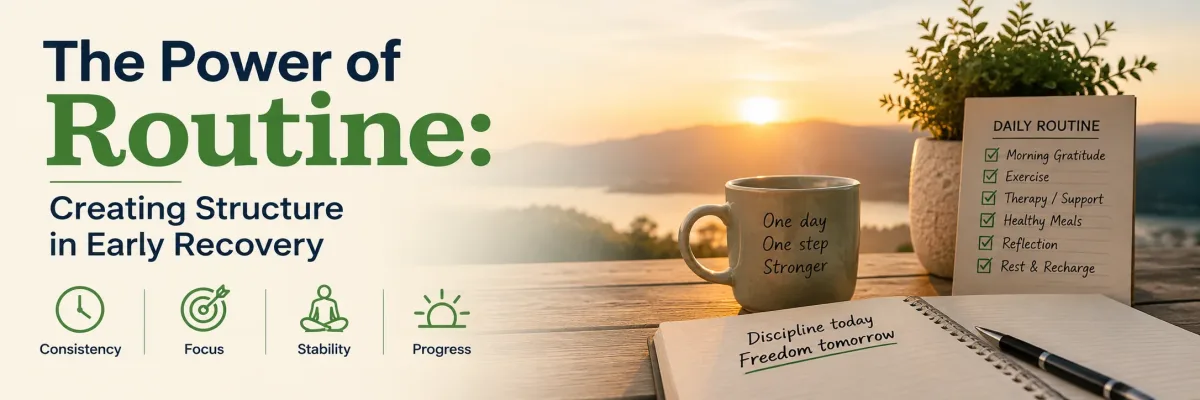
The Power of Routine Creating Structure in Early Recovery
Early recovery is one of the most vulnerable seasons a person can walk through. I have seen it time and time again; when the chaos of addiction stops, silence takes its place. That silence can feel unsettling, even scary. Without substances running the show anymore, many people are left wondering, “Now what?”
This is where routine becomes more than just a schedule. In early recovery, routine is stability, safety, and self-respect. It’s one of the most powerful, and underestimated, tool for building a solid foundation in sobriety.
Why Routine is so Important in Early Recovery
Addiction doesn’t just affect behavior, it disrupts every natural rhythm in the body and mind. Sleep, eating, emotions, motivation, and responsibility all get thrown off balance. When someone enters early recovery, their nervous system is still in survival mode.
Routine helps calm that chaos.
Structure creates predictability, and predictability creates safety. When you know what your day looks like, you spend less time reacting and more time healing. A consistent daily routine in recovery can:
- Reduce anxiety and mental overwhelm
- Limit impulsive decision making
- Decrease cravings and emotional triggers
- Restore a sense of control and purpose
- Support long term sobriety
Routine isn’t about control it’s about rebuilding trust with yourself.
How Structure Supports the Recovering Brain
In addiction, the brain becomes wired for instant gratification. Early recovery is about rewiring those pathways and that takes time, repetition, and consistency.
Routine reduces decision fatigue. Instead of constantly asking, “What should I do right now?” your brain learns healthy patterns. Over time, those patterns become habits, and those habits become a lifestyle that supports recovery.
Structure allows the brain to rest, reset, and repair.
Emotional Stability Through Daily Routine
One of the biggest surprises in early sobriety is how intense emotions can feel. Without substances numbing everything, feelings come back, sometimes all at once.
A daily routine helps anchor those emotions.
Knowing when you will wake up, eat, attend meetings, move your body, or wind down for the night gives your nervous system a sense of grounding. This is especially important for people dealing with:
- Anxiety in early recovery
- Depression after addiction
- Mood swings or irritability
- Post-acute withdrawal symptoms (PAWS)
Routine doesn’t eliminate emotions it helps you respond to them instead of reacting.
Core Areas Where Routine Makes the Biggest Difference
Consistent Sleep and Wake Times
Sleep is foundational to recovery. Without it, everything feels harder.
Going to bed and waking up at the same time each day helps regulate mood, energy, and focus. Poor sleep increases relapse risk, while healthy sleep supports emotional balance and decision-making.
Even when sleep feels difficult at first, consistency matters.
Nutrition and Regular Meals
Addiction often leaves the body depleted. In early recovery, proper nutrition isn’t optional; it’s part of healing.
Eating regular meals stabilizes blood sugar, improves mood, and reduces cravings that can easily be mistaken for hunger or emotional distress.
Routine around meals sends a powerful message: “I take care of myself now.”
Morning Routines That Set the Tone
How you start your day matters more than most people realize.
A simple morning routine, making your bed, stretching, journaling, reading recovery material, or spending a few minutes in quiet reflection, creates momentum. These small actions build discipline, confidence, and self-respect.
You don’t have to do everything. You just have to show up.
Scheduling Recovery First
One of the biggest mistakes I see in early recovery is treating recovery like an afterthought. Routine flips that script.
When meetings, therapy, recovery coaching, or personal reflection are scheduled into the day, they become non-negotiable. Recovery doesn’t happen “when there’s time”, it happens when it’s prioritized.
Consistency builds resilience.
Movement and Physical Activity
You don’t need an extreme fitness plan to benefit from movement in recovery. Walking, stretching, yoga, or light workouts can dramatically improve mood, sleep, and stress levels.
Routine movement helps reconnect the mind and body, something addiction often disconnects.
Routine Doesn’t Mean Rigidity
One thing I want to be clear about: routine is not punishment.
Healthy structure allows flexibility. Recovery is about progress, not perfection. Some days won’t go as planned, and that’s okay. The goal is consistency over time, not rigid control.
If a routine becomes overwhelming, it can always be adjusted. Recovery is a living process.
Why Routine Lowers the Risk of Relapse
Unstructured time is one of the most dangerous things in early recovery. Boredom, isolation, and overthinking create space for cravings to grow.
Routine fills that space with purpose.
When your day has structure, you are less likely to drift into old patterns. You are actively choosing recovery, one habit at a time.
Routine isn’t restrictive. It’s protective.
Building a Routine That Works for You
There is no perfect recovery routine. The best one is the one you can realistically maintain.
Start small:
- One consistent wake-up time
- One recovery commitment per day
- One healthy habit you repeat
Over time, those small choices compound into real change.
Final Thoughts
In early recovery, routine is an act of self-respect.
It’s a way of saying, “My life is worth structure. My healing is worth consistency.” You don’t need to have everything figured out; you just need a framework that supports growth.
At Revive Recovery Center, we believe sustainable recovery is built through daily actions, not quick fixes. Structure creates the foundation where freedom, clarity, and long-term sobriety can grow.
One day at a time. One routine at a time.
Contact a Recovery Specialist today to explore your recovery options.
Let’s Talk
At Revive Recovery Center of Beaumont, we are more than a treatment facility, we are a family-focused recovery community. We help individuals and their loved ones rebuild their lives with compassion, structure, and long-term support.
Call us today or reach out online to speak confidentially with our team.
Together, we will help you learn to love with boundaries and support with strength.
About the author
Jean Bourque, LCDC, serves as Program Director at Revive Recovery Center of Beaumont. Known for her compassionate leadership and holistic approach, Jean is dedicated to helping clients and families heal, grow, and thrive in recovery.